"Better than a gift given with a joyous heart Are sweet words spoken with a cheerful smile."
-Tirukkural ISSUE-11-YEAR-1
In this issue: Favourite Forever: Robert Frost, Sir John Betjman. Poetry Here & Now: Milorad Krystanovich . Story : O Henry. Introduction to...by Abir Mathur.
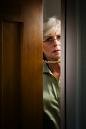
As soon as winter rolls in shops in U.K. starts racking up all sort of wonderful and beautiful stuff for kids and adults alike. In this preparation of merriment and folly we shouldn't forget those elderly and house-bound; specially in these European cities, where they live like a shadow, unseen, unnoticed, even uncared for; yet these are the people who created our today. If only we could spare just a few minutes from our hustling-bustling or overflowing days and just say hello to them ... even that will wipe off lot of gloom from their lonely and dark days. Often than not, there is no other human voice in their entire day than that coming out of a television. If we can do more it will be good for the society as a whole. No body can be fully happy and content if all those around us aren't; be it a society or an individual; sooner or later we all should understand and adopt this holistic attitude or philosophy in life. Why not adopt a granny just for the Christmas... We will not lose anything by doing so, might gain a friend for life instead. Events in big scale are often organized everywhere to raise money for the destitute, but the minor and obvious duties often ignored and forgotten.
This is that time of year when calendar is about to tick all it’s dates again. For many centuries we have watched and let this flow of time pass us by, because we are standing still. Refusing to budge from our prejudices and misunderstandings, often not only we misunderstand others but our own values and principles also. Recently a teacher with the help of all the children in her classroom chose a certain name for a teddy bear, for which she was rebuked and shamed...a food for thought or a farce indeed. When an innocent gesture starts hurting the sentiments of whole nation and turns into a crime and how far one can go ( an individual, group or nation) in its severity or sensivity towards others; is a bone of discontentment even today!
Leaving these burning questions to the leaders and politicians only; whose unsympathetic and blindfolded attitude is turning the whole world into a battlefield and Still keeping our faith in the goodness of mankind, let us all welcome the fresh 2008 with a renewed hope and open arms.
Once again; Merry Christmas and Happy New Year to you all!
The bells of Advent ring, The tortoise stove is lit again And lamp-oil light across the night Has caught the streaks of winter rain In many a stained-glass window sheen From Crimson Lake to Hooker's Green.
The holly in the windy hedge And round the Manor House the yew Will soon be stripped to deck the ledge, The altar, font and arch and pew, So that the villagers can say ' The church looks nice' on Christmas Day.
Provincial public houses blaze And Corporation tarmacars clang, On lighted tenements I gaze Where paper decorations hang, And bunting in the red Town Hall Says ' Merry Christmas To You All.'
And London shops on Christmas Eve Are strung with silver bells and flowers As hurrying clerks the city leave To pigeon-haunted classic towers, And marbled clouds go scudding by The many-steepled London-sky.
And girls in slacks remember Dad And oafish louts remember mum, And sleepless children's heart's are glad, And chistmas-morning bells say 'Come!' Even to shining ones who dwell Safe in Dorchester Hotel.
And is it true? And is it true, This most tremendous tale o all, Seen in a stained-glass window's hue, A baby in an ox's stall? The maker of the stars and sea Become a Child on earth for me?
And is it true? For if it is, Not loving fingers tying strings around those tissued fripperies, The sweet and silly Christmas things, Bath salts and inexpensive scent And hideous tie so kindly meant,
No love that in a family dwells, No carolling in frosty air, Nor all the steeple-shaking bells, Can with this single Truth compare- That God was Man in Palestine And lives today in Bread and Wine
But all the same it's strange to me How very full the church can be With people I don't see at all Except at harvest festival
Sir John Beltjeman
STOPPING BY WOODS ON A SNOWY EVENING
Whose woods these are I think I know, His house is in the village though; He will not see me stopping here To watch his woods fill up with snow.
My little horse must think it queer To stop without a farmhouse near Between the woods and frozen lake The darkest Evening of the year.
He gives his harness bells a shake To ask if there is some mistake. The only other sound's the sweep Of easy wind and downing flake.
The woods are lovely, dark and deep. But I have promises to keep, And miles to go before I sleep, And miles to go before I sleep.
A diary for all the words I used in the past But no more The pages and language Burnt Words dried In a pen filled With the diarist's illusions On the emptiness Of a glass surface I create a new rhythm Forcing it into air A thin thread Of sunlight and blue Pierces the reflection Of an English sky I touch the grey feather Shed by a dove The inkwell is filled with ash
No presence
alone like a mirror with no reflections the man cannot see himself the place where mirror used to be is faded reflects neither him nor crowd the wall where it hung for nearly forty years divides past and future his tears do not fall yet will not dry his eyes absorb them all he has no cry no sad look his presence among people disturbs him if he is sent to the specialist for smiles lost in the surface of life he might not show his face there either
------------------------------------------------------------------------------------------------------------------------------------------- story classic
by: O. HENRY
The Last Leaf
In a little district west of Washington Square the streets have run crazy and broken themselves into small strips called "places." These "places" make strange angles and curves. One Street crosses itself a time or two. An artist once discovered a valuable possibility in this street. Suppose a collector with abill for paints, paper and canvas should, in traversing this route, suddenly meet himself coming back, without a cent having been paid on account!
So, to quaint old Greenwich Village the art people soon came prowling, hunting for north windows and eighteenth-century gables and Dutch attics and low rents. Then they imported some pewter mugs and a chafing dish or two from Sixth Avenue, and became a "colony."
At the top of a squatty, three-story brick Sue and Johnsy had their studio. "Johnsy" was familiar for Joanna. One was from Maine; the other from California. They had met at the table d'hôte of an Eighth Street "Delmonico's," and found their tastes in art, chicory salad and bishop sleeves so congenial that the joint studio resulted.
That was in May. In November a cold, unseen stranger, whom the doctors called Pneumonia, stalked about the colony, touching one here and there with his icy fingers. Over on the east side this ravager strode boldly, smiting his victims by scores, but his feet trod slowly through the maze of the narrow and moss-grown "places."
Mr. Pneumonia was not what you would call a chivalric old gentleman. A mite of a little woman with blood thinned by California zephyrs was hardly fair game for the red-fisted, short-breathed old duffer. But Johnsy he smote; and she lay, scarcely moving, on her painted iron bedstead, looking through the small Dutch window-panes at the blank side of the next brick house.
One morning the busy doctor invited Sue into the hallway with a shaggy, gray eyebrow.
"She has one chance in - let us say, ten," he said, as he shook down the mercury in his clinical thermometer. " And that chance is for her to want to live. This way people have of lining-u on the side of the undertaker makes the entire pharmacopoeia look silly. Your little lady has made up her mind that she's not going to get well. Has she anything on her mind?"
"She - she wanted to paint the Bay of Naples some day." said Sue.
"Paint? - bosh! Has she anything on her mind worth thinking twice - a man for instance?"
"A man?" said Sue, with a jew's-harp twang in her voice. "Is a man worth - but, no, doctor; there is nothing of the kind."
"Well, it is the weakness, then," said the doctor. "I will do all that science, so far as it may filter through my efforts, can accomplish. But whenever my patient begins to count the carriages in her funeral procession I subtract 50 per cent from the curative power of medicines. If you will get her to ask one question about the new winter styles in cloak sleeves I will promise you a one-in-five chance for her, instead of one in ten."
After the doctor had gone Sue went into the workroom and cried a Japanese napkin to a pulp. Then she swaggered into Johnsy's room with her drawing board, whistling ragtime.
Johnsy lay, scarcely making a ripple under the bedclothes, with her face toward the window. Sue stopped whistling, thinking she was asleep.
She arranged her board and began a pen-and-ink drawing to illustrate a magazine story. Young artists must pave their way to Art by drawing pictures for magazine stories that young authors write to pave their way to Literature.
As Sue was sketching a pair of elegant horseshow riding trousers and a monocle of the figure of the hero, an Idaho cowboy, she heard a low sound, several times repeated. She went quickly to the bedside.
Johnsy's eyes were open wide. She was looking out the window and counting - counting backward.
"Twelve," she said, and little later "eleven"; and then "ten," and "nine"; and then "eight" and "seven", almost together.
Sue look solicitously out of the window. What was there to count? There was only a bare, dreary yard to be seen, and the blank side of the brick house twenty feet away. An old, old ivy vine, gnarled and decayed at the roots, climbed half way up the brick wall. The cold breath of autumn had stricken its leaves from the vine until its skeleton branches clung, almost bare, to the crumbling bricks.
"What is it, dear?" asked Sue.
"Six," said Johnsy, in almost a whisper. "They're falling faster now. Three days ago there were almost a hundred. It made my head ache to count them. But now it's easy. There goes another one. There are only five left now."
"Five what, dear? Tell your Sudie."
"Leaves. On the ivy vine. When the last one falls I must go, too. I've known that for three days. Didn't the doctor tell you?"
"Oh, I never heard of such nonsense," complained Sue, with magnificent scorn. "What have old ivy leaves to do with your getting well? And you used to love that vine so, you naughty girl. Don't be a goosey. Why, the doctor told me this morning that your chances for getting well real soon were - let's see exactly what he said - he said the chances were ten to one! Why, that's almost as good a chance as we have in New York when we ride on the street cars or walk past a new building. Try to take some broth now, and let Sudie go back to her drawing, so she can sell the editor man with it, and buy port wine for her sick child, and pork chops for her greedy self."
"You needn't get any more wine," said Johnsy, keeping her eyes fixed out the window. "There goes another. No, I don't want any broth. That leaves just four. I want to see the last one fall before it gets dark. Then I'll go, too."
"Johnsy, dear," said Sue, bending over her, "will you promise me to keep your eyes closed, and not look out the window until I am done working? I must hand those drawings in by to-morrow. I need the light, or I would draw the shade down."
"Couldn't you draw in the other room?" asked Johnsy, coldly.
"I'd rather be here by you," said Sue. "Beside, I don't want you to keep looking at those silly ivy leaves."
"Tell me as soon as you have finished," said Johnsy, closing her eyes, and lying white and still as fallen statue, "because I want to see the last one fall. I'm tired of waiting. I'm tired of thinking. I want to turn loose my hold on everything, and go sailing down, down, just like one of those poor, tired leaves."
"Try to sleep," said Sue. "I must call Behrman up to be my model for the old hermit miner. I'll not be gone a minute. Don't try to move 'til I come back."
Old Behrman was a painter who lived on the ground floor beneath them. He was past sixty and had a Michael Angelo's Moses beard curling down from the head of a satyr along with the body of an imp. Behrman was a failure in art. Forty years he had wielded the brush without getting near enough to touch the hem of his Mistress's robe. He had been always about to paint a masterpiece, but had never yet begun it. For several years he had painted nothing except now and then a daub in the line of commerce or advertising. He earned a little by serving as a model to those young artists in the colony who could not pay the price of a professional. He drank gin to excess, and still talked of his coming masterpiece. For the rest he was a fierce little old man, who scoffed terribly at softness in any one, and who regarded himself as especial mastiff-in-waiting to protect the two young artists in the studio above.
Sue found Behrman smelling strongly of juniper berries in his dimly lighted den below. In one corner was a blank canvas on an easel that had been waiting there for twenty-five years to receive the first line of the masterpiece. She told him of Johnsy's fancy, and how she feared she would, indeed, light and fragile as a leaf herself, float away, when her slight hold upon the world grew weaker.
Old Behrman, with his red eyes plainly streaming, shouted his contempt and derision for such idiotic imaginings.
"Vass!" he cried. "Is dere people in de world mit der foolishness to die because leafs dey drop off from a confounded vine? I haf not heard of such a thing. No, I will not bose as a model for your fool hermit-dunderhead. Vy do you allow dot silly pusiness to come in der brain of her? Ach, dot poor leetle Miss Yohnsy."
"She is very ill and weak," said Sue, "and the fever has left her mind morbid and full of strange fancies. Very well, Mr. Behrman, if you do not care to pose for me, you needn't. But I think you are a horrid old - old flibbertigibbet."
"You are just like a woman!" yelled Behrman. "Who said I will not bose? Go on. I come mit you. For half an hour I haf peen trying to say dot I am ready to bose. Gott! dis is not any blace in which one so goot as Miss Yohnsy shall lie sick. Some day I vill baint a masterpiece, and ve shall all go away. Gott! yes."
Johnsy was sleeping when they went upstairs. Sue pulled the shade down to the window-sill, and motioned Behrman into the other room. In there they peered out the window fearfully at the ivy vine. Then they looked at each other for a moment without speaking. A persistent, cold rain was falling, mingled with snow. Behrman, in his old blue shirt, took his seat as the hermit miner on an upturned kettle for a rock.
When Sue awoke from an hour's sleep the next morning she found Johnsy with dull, wide-open eyes staring at the drawn green shade.
"Pull it up; I want to see," she ordered, in a whisper.
Wearily Sue obeyed.
But, lo! after the beating rain and fierce gusts of wind that had endured through the livelong night, there yet stood out against the brick wall one ivy leaf. It was the last one on the vine. Still dark green near its stem, with its serrated edges tinted with the yellow of dissolution and decay, it hung bravely from the branch some twenty feet above the ground.
"It is the last one," said Johnsy. "I thought it would surely fall during the night. I heard the wind. It will fall to-day, and I shall die at the same time."
"Dear, dear!" said Sue, leaning her worn face down to the pillow, "think of me, if you won't think of yourself. What would I do?"
But Johnsy did not answer. The lonesomest thing in all the world is a soul when it is making ready to go on its mysterious, far journey. The fancy seemed to possess her more strongly as one by one the ties that bound her to friendship and to earth were loosed.
The day wore away, and even through the twilight they could see the lone ivy leaf clinging to its stem against the wall. And then, with the coming of the night the north wind was again loosed, while the rain still beat against the windows and pattered down from the low Dutch eaves.
When it was light enough Johnsy, the merciless, commanded that the shade be raised.
The ivy leaf was still there.
Johnsy lay for a long time looking at it. And then she called to Sue, who was stirring her chicken broth over the gas stove.
"I've been a bad girl, Sudie," said Johnsy. "Something has made that last leaf stay there to show me how wicked I was. It is a sin to want to die. You may bring a me a little broth now, and some milk with a little port in it, and - no; bring me a hand-mirror first, and then pack some pillows about me, and I will sit up and watch you cook."
And hour later she said:
"Sudie, some day I hope to paint the Bay of Naples."
The doctor came in the afternoon, and Sue had an excuse to go into the hallway as he left.
"Even chances," said the doctor, taking Sue's thin, shaking hand in his. "With good nursing you'll win." And now I must see another case I have downstairs. Behrman, his name is - some kind of an artist, I believe. Pneumonia, too. He is an old, weak man, and the attack is acute. There is no hope for him; but he goes to the hospital to-day to be made more comfortable."
The next day the doctor said to Sue: "She's out of danger. You won. Nutrition and care now - that's all."
And that afternoon Sue came to the bed where Johnsy lay, contentedly knitting a very blue and very useless woollen shoulder scarf, and put one arm around her, pillows and all.
"I have something to tell you, white mouse," she said. "Mr. Behrman died of pneumonia to-day in the hospital. He was ill only two days. The janitor found him the morning of the first day in his room downstairs helpless with pain. His shoes and clothing were wet through and icy cold. They couldn't imagine where he had been on such a dreadful night. And then they found a lantern, still lighted, and a ladder that had been dragged from its place, and some scattered brushes, and a palette with green and yellow colors mixed on it, and - look out the window, dear, at the last ivy leaf on the wall. Didn't you wonder why it never fluttered or moved when the wind blew? Ah, darling, it's Behrman's masterpiece - he painted it there the night that the last leaf fell.
Have you ever wondered how rainbows just appear out of nowhere? I have been fascinated by rainbows since my childhood. I noticed rainbows seemed to form when it rained, but not always. It must have been a total mystery for our ancesters too and it is not surprising to hear the tales that flood our past about them; that if you get to the end of a rainbow you would find a pot of gold.
In this article I'll be explaining the physics behind rainbows and discover whether any of these tales is true! It all started when Sir Issack Newton discovered the seven distinct coloures of the visible spectrum. If there is anything anyone remembers about their physics lessons , it is the experiment they did with prisms. When white light is passed through a prism, it magically seperates into lots of different colours. Why? Well, because white light is a combination of all the colours. When they are all combined, they look white.
When the white light hits the prism it changes direction because it has moved ito a denser region (the prism) from the one less dense (the air). More specifically, each colour in the white light slightly changes direction (to be very technical, the different colours we see are due to the different wavelengths of light which travel at different speeds when light passes through a new medium). So the colours split up and we see them seperately. This light is said to have refracted and dispersed(into the various colours). We will see that this is the reason why we see all the colours in the rainbow.
On a normal day we see sunlight as white light because it comes straight into our eyes from the sun. There aren't any prisms floating in the sky to stop this. But when it's raining, the light has to pass rain droplets which act like millions of tiny prisms. Now water is denser than air (just like prism). If sunlight hits a water droplet at the right angle it is; (1) refracted as it enters the rain drop, that is, the light breaks up into different colours of the rainbow as it enters, and (2) reflected at the back of raindrops also.
After being reflected, the colours are refracted again when the light comes out of the drop (as the light is entering a less denser medium -air). Rainbows can only occur when we have TIR or total internal reflection, i.e. when the light reflects at the back of the raindrop instead of just going straight through it. This happens only when the light hits the raindrop at certain angles.
We can deduce frome this that only when the sun is at the right height in the sky ( so the light hits the drop at the right angle) and it's raining, would we see a rainbow. This explains why we don't always see rainbows when it rains.
Now we just have been focussing on one raindrop. Rain has millions of these actinh like tiny prisms. Then, Why don't see the rainbow all over the sky when it's raining? Why is it only in a certain band? Well, we see the rainbow through raindrops falling in a certain region in the sky ( which turns out to be the bow we see as a rainbow) because in this region the sunlight the sunlight is hitting the drops at just the right angle to cause TIR and for the dispersed light ( the rainbow colours) to head back towards our eyes. As the colurs are bent in different direction from each raindrop they form the stripes we see in the rainbow. So, as we need the sunlight to be reflected at the back of the raindrop, we can deduce that to see a rainbow we must have the sun behind us and the rain in front of us. Next time you see a rainbow, notice that this is so.
Rainbows are not really bow shaped. They are a full circle. We just see the top part of the circle because the horizon blocks our view of the rest. If you were on a plane and saw a rainbow you would see the full circle. So, there is no place where the rainbow finishes on the ground, its all in the sky! Thus the tale about a pot of gold at the end of a rainbow cannot be true.
Isn't it amazing to see such a mysterious phenomenon such as a rainbow to be defined in such a precise and mathmetical way? We can even calculate the angle at which we will see a rainbow; the angle of refraction needed by light in a rainbow is 40-42 degrees (to the eye of observer).
Did you know!
Every person form their own rainbow when they look up at the sky. The rainbow is a full circle. The centre of the rainbow spectrum is at the head of your shadow.
The order of the rainbow spectrum is always red, orange, yellow, green, blue, indigo, and violet ( a useful minemonic is VIBGYOR- the colours backwards).
Sometimes you can see two rainbows with the coloures on the second bow reversed. This happens when there is more than one reflection inside the raindrops.
What we see, feel, hear, taste and smell exists between the frequencies of red and violet.
Rainbows and music are made of same stuff, vibrating at a different frequency.





 As soon as winter rolls in shops in U.K. starts racking up all sort of wonderful and beautiful stuff for kids and adults alike. In this preparation of merriment and folly we shouldn't forget those elderly and house-bound; specially in these European cities, where they live like a shadow, unseen, unnoticed, even uncared for; yet these are the people who created our today. If only we could spare just a few minutes from our hustling-bustling or overflowing days and just say hello to them ... even that will wipe off lot of gloom from their lonely and dark days. Often than not, there is no other human voice in their entire day than that coming out of a television. If we can do more it will be good for the society as a whole. No body can be fully happy and content if all those around us aren't; be it a society or an individual; sooner or later we all should understand and adopt this holistic attitude or philosophy in life. Why not adopt a granny just for the Christmas... We will not lose anything by doing so, might gain a friend for life instead. Events in big scale are often organized everywhere to raise money for the destitute, but the minor and obvious duties often ignored and forgotten.


 In a little district west of Washington Square the streets have run crazy and broken themselves into small strips called "places." These "places" make strange angles and curves. One Street crosses itself a time or two. An artist once discovered a valuable possibility in this street. Suppose a collector with abill for paints, paper and canvas should, in traversing this route, suddenly meet himself coming back, without a cent having been paid on account!
 "I have something to tell you, white mouse," she said. "Mr. Behrman died of pneumonia to-day in the hospital. He was ill only two days. The janitor found him the morning of the first day in his room downstairs helpless with pain. His shoes and clothing were wet through and icy cold. They couldn't imagine where he had been on such a dreadful night. And then they found a lantern, still lighted, and a ladder that had been dragged from its place, and some scattered brushes, and a palette with green and yellow colors mixed on it, and - look out the window, dear, at the last ivy leaf on the wall. Didn't you wonder why it never fluttered or moved when the wind blew? Ah, darling, it's Behrman's masterpiece - he painted it there the night that the last leaf fell.
 Have you ever wondered how rainbows just appear out of nowhere? I have been fascinated by rainbows since my childhood. I noticed rainbows seemed to form when it rained, but not always. It must have been a total mystery for our ancesters too and it is not surprising to hear the tales that flood our past about them; that if you get to the end of a rainbow you would find a pot of gold.
 Sometimes you can see two rainbows with the coloures on the second bow reversed. This happens when there is more than one reflection inside the raindrops.
